

























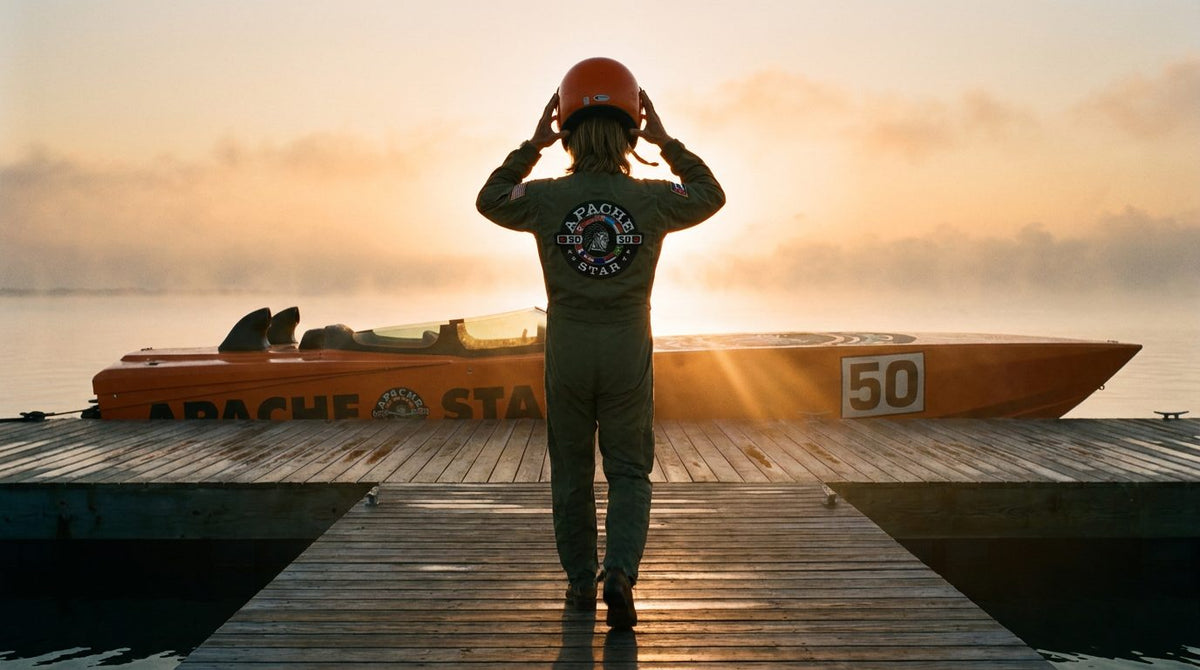
We have made a short film about ninety miles of water — made entirely with AI, entered in the Higgsfield Global Film Festival — and the first question everybody asks is the same one: which parts are true?
Dossier
- The film
- THE BRIDGE: 90 miles apart — no dialogue, made entirely with AI
- Festival
- Higgsfield Global Film Festival 2026
- True
- APACHE STAR set the Key West–Havana record in 2015; the boat, the distance, the buoy, the cigar and the espresso, the broken drive and the failed navigation, the garland on arrival, the number 50, the two flags on a real racing overall
- Invented
- Both characters, the meeting eleven years ago, the drawer, the bridge
- Characters
- Invented. Every character in the film is fictional.
- Premiere
- Parklichtspiele Buckow, Wriezener Str. 1, 15377 Buckow · 20 September 2026
It is a fair question, and the honest answer is that the film sits on a real record and invents almost everything around it. Here is the line, drawn precisely.
Quiz
True or invented?
Before you read on, test yourself. Eight moments from the film and the story behind it: for each one, decide whether it happened or whether we made it up.

A morning at the 90-miles buoy in Key West.
TrueIn 2011, at six in the morning, Roger Klüh sat at the Southernmost Point with a Cuban cigar and an espresso and decided: Cuba it is.Film still · 2:26

A cigar kept unlit for eleven years.
InventedThe Cuban cigar at the buoy was real. The one he keeps for eleven years and hands back on the bridge belongs to the film.Film still · 6:41

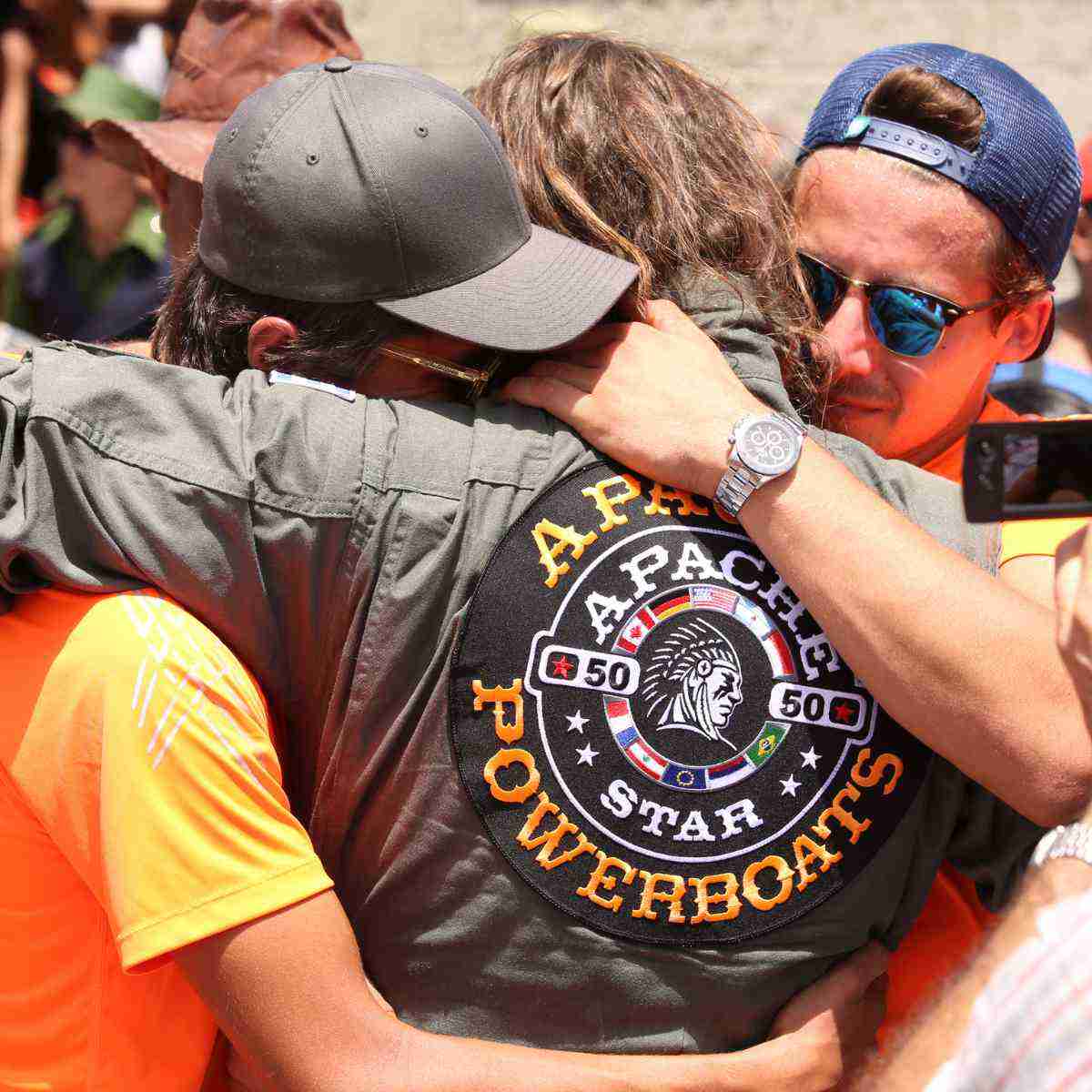
Racing overalls with the number 50.
TrueThis is a photograph of the real crew in 2015, not a film still.Photograph · 2015

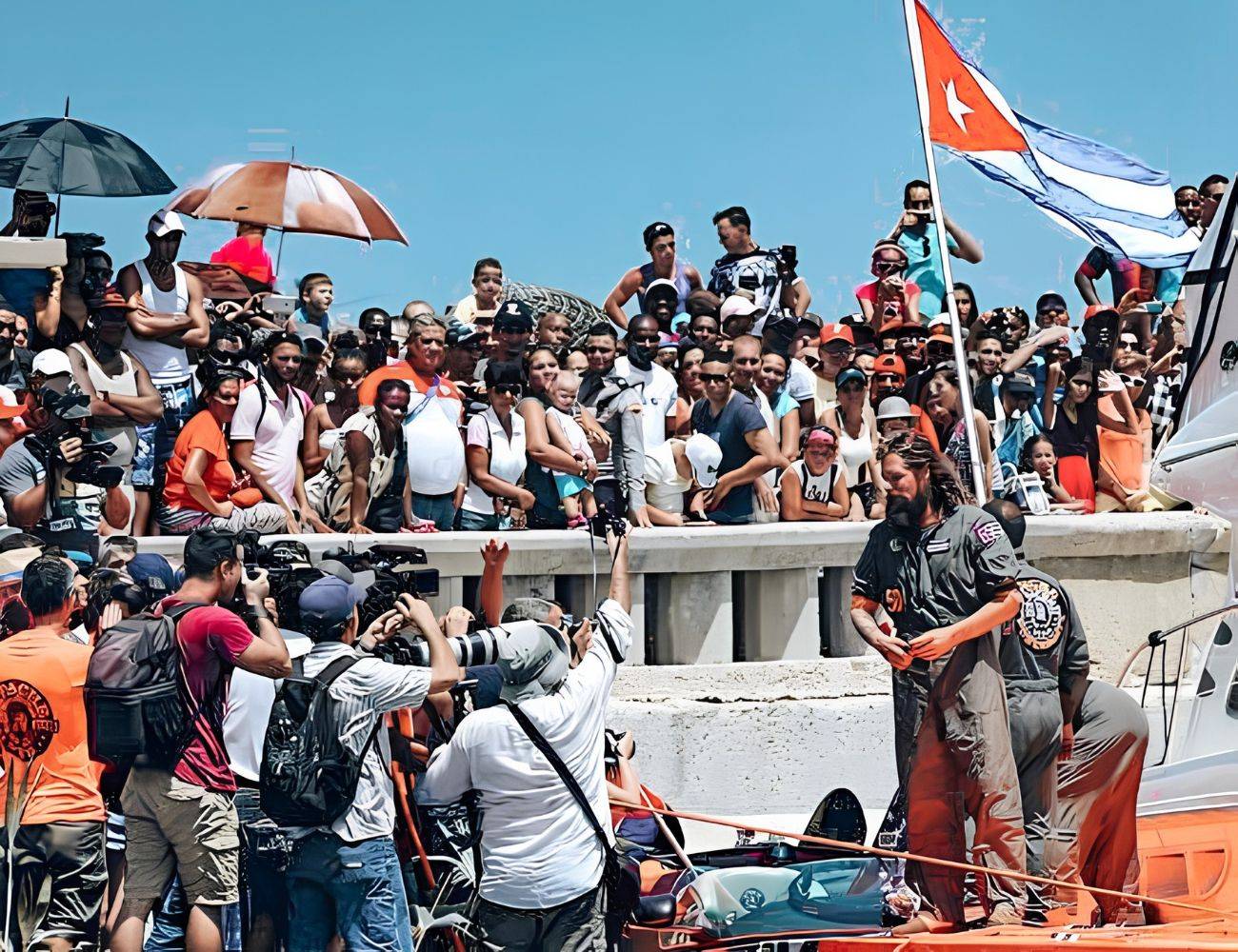
A crowd waiting in Havana.
True“Thousands of locals are standing on the Malecón, waiting for us,” Roger Klüh writes in Apache Star.Photograph · Havana, 1 August 2015

A sign that reads 90 MILES TO THE USA.
InventedThe sign and the bridge it stands on were made for the film. The real marker is the buoy at the Southernmost Point in Key West.Film still · 5:50

A woman who waited eleven years.
InventedShe, the meeting and the eleven years belong to the film.Film still · 5:03

A print kept face-down in a drawer in Havana.
InventedThe drawer, the room and the print were built for the film.Film still · 3:15

A bridge between the two shores.
InventedNo bridge crosses the ninety miles. But the sentence behind it is real: “A bridge from will to reality had been built.”Film still · 5:40
True
What actually happened
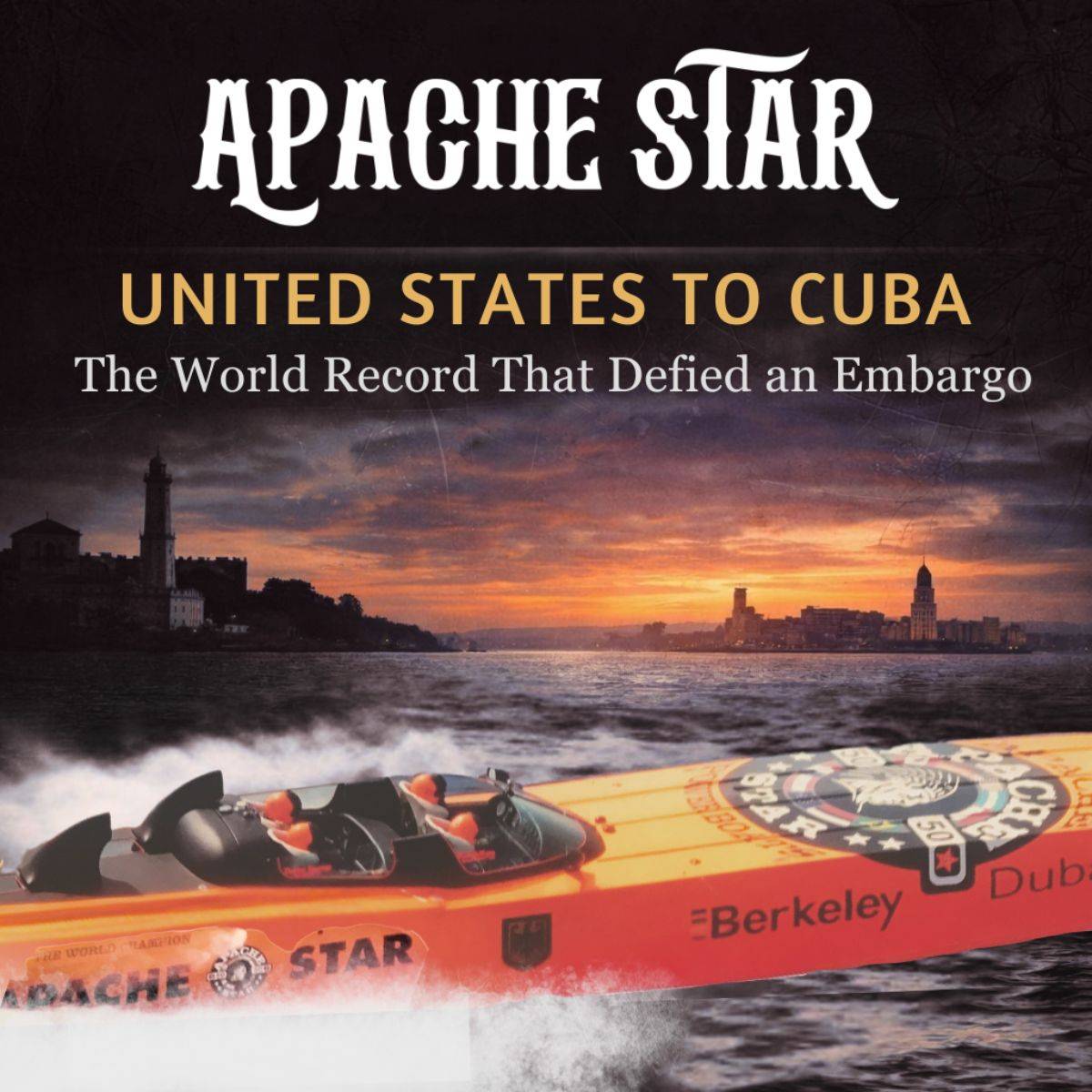
The powerboat APACHE STAR set the Key West–Havana record in 2015. The shortest stretch of water between the United States and Cuba is ninety miles, but on 1 August she ran the longer route, from Key West to Havana — around 110 nautical miles — in 90 minutes. The mark she broke had stood since 1958: six hours, twenty-four minutes and forty seconds, set by the American boater Forest Johnson on the longer run from Miami.
The run, minute by minute
- 0′ · 10:00 · Stock Island, Key WestThe escort helicopter draws level, and APACHE STAR is off.
- HalfwayA loud bang. The boat pulls hard to the right and the right engine overheats. A quarter of an hour stopped in heavy seas, hatch open — then on again, without knowing why.
- Navigation downThe navigation system fails. A small handheld unit, carried in a racing overall, shows the way instead.
- Intercom downThe crew can no longer hear each other. Roger Klüh unbuckles and steers by his navigator’s hand signals, correcting course every few minutes.
- Land in sightA speck on the horizon becomes Cuba. The US helicopter turns back: it may not follow into Cuban airspace.
- The MalecónHavana’s skyline, then the sea wall: thousands of locals waving as APACHE STAR runs past at full throttle, but only half speed.
- 90′ · The finishBetween a ship waving the chequered flag and a buoy: 110 nautical miles from Key West to Havana in 90 minutes. Moments later, in a left turn to greet the crowd, the right drive explodes and tears away the steering mount — APACHE STAR can no longer be steered.
Events in the order Roger Klüh tells them in Apache Star (2021). The marker moves at an even pace: a sketch of the run, not a GPS track.
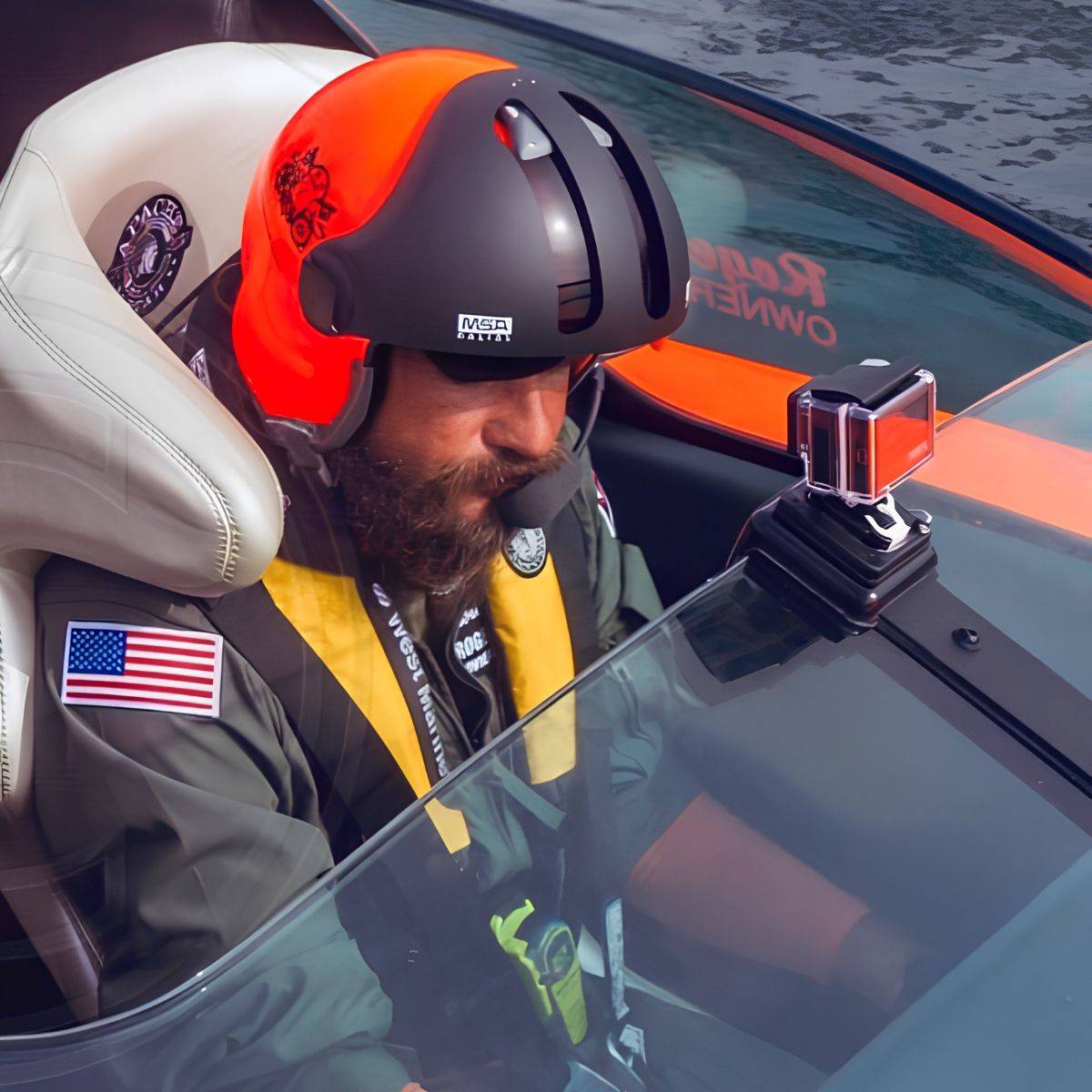
Roger Klüh drove. He was fifty years old — the run was one day after his fiftieth birthday.


The boat was not new. She won the world championship at Key West in 1992 and again in 1993, under the name Apache Heritage, as the first canopied sit-down V-bottom race boat anyone had built. Omar Danial designed her and drove her, and at twenty-two became the youngest offshore world champion in history: 94.74 mph over a 147-mile course in 1992, then 88.73 mph through eight-foot breaking seas in 1993.
Then she disappeared, until Roger found her hull in 2011 under a torn tarpaulin in a Miami boatyard and signed for her on 31 January 2012. Over seven thousand hours of restoration followed: the hull gutted and rebuilt around a free-floating titanium floor on spring bearings, twin Mercury Racing bi-turbo engines making 2,700 horsepower, over 115 knots in testing, painted in a single colour made for her — ApacheStar Orange. Roger restored and rebuilt APACHE STAR for a single purpose: the run to Cuba. Cuba was always the only goal.
The part that never makes the brochure: the first permit application was refused. Roger applied in the summer of 2013, received a clear no, lost his appeal in 2014 and applied again on 20 March 2015. The authorisation arrived barely four weeks before the run.
Invented
What we made up
Almost everything else.
There is no woman in Havana. There was no meeting eleven years ago, no photograph kept face-down in a drawer, no ride toward a bridge. Every character in the film is invented.
The film is not a documentary about the crossing. It borrows the distance and asks a different question — not can it be crossed, but what does it cost to wait on either side of it.


The interesting column
The things that look invented and aren't
This one is longer than we expected.
The cigar, the coffee and the buoy. One morning in 2011, at six o'clock, Roger Klüh sat at the southernmost point of the United States in Key West — a Cuban cigar in one hand, an espresso in the other — looking at the buoy that gives the distance to Cuba: ninety miles. That is where the idea was born. “Cuba it is,” he writes in his book Apache Star.
The broken drive and the failed navigation. Halfway across there was a loud bang: the boat pulled hard to the right and the right engine overheated. The crew stopped for a quarter of an hour in heavy seas, hatch open, and then ran on without knowing why. Soon afterwards the navigation system failed, and a small handheld unit carried in a racing overall showed the way instead. When the intercom went too, Roger Klüh unbuckled and steered by his navigator’s hand signals. Moments after the finish the right drive exploded and tore away the steering mount, so the boat could no longer be steered. Only with the boat out of the water did the crew see why: its shaft was cut in half — probably by flotsam, perhaps by a container lost from a freighter.


The garland and the honour. The welcome in the film is not exaggerated. APACHE STAR was towed into Havana harbour, where thousands of people and camera crews were waiting, and the Commodore of the Marina Hemingway hung a handmade garland of roses around Roger Klüh’s neck. In February 2016, at a state reception in Havana, Cuba honoured him with the Order of Sporting Merit (Orden al Mérito Deportivo), presented by the Minister of Sport in the name of President Raúl Castro.

The number 50. The racing overalls in the remembered sequence carry it. It looks like a brand device. It isn't. That number came aboard with the throttleman Richie Powers. He had raced under 50 with Don Johnson; when he later joined Omar Danial in the cockpit of Apache Heritage, he brought the 50 with him. She won both world championships under it, and it stayed on the hull when she became APACHE STAR. She has always been forty-five feet long.
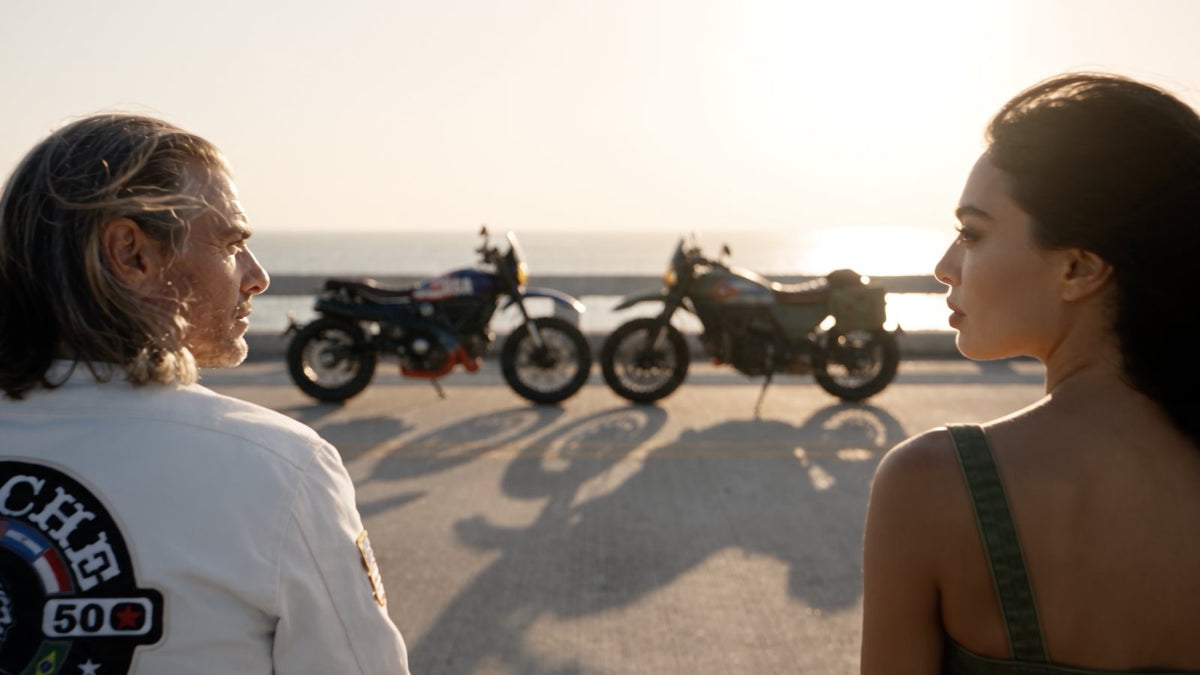
Both countries, on one garment. The motorcycle's two-sided livery — one flank American, one flank Cuban — reads as a concept invented for a film. It isn't that either. Photograph the quay in Havana in 2015 and you find it already there: the Cuban flag and the Stars and Stripes on the driver's olive racing overall, one on each upper arm.

The orange. The base layer at his wrists and collar in those photographs is the same orange that went on the boat, and the same orange in the film.
The bike did not invent that idea. It inherited it.
The other column
The things that look real and aren't
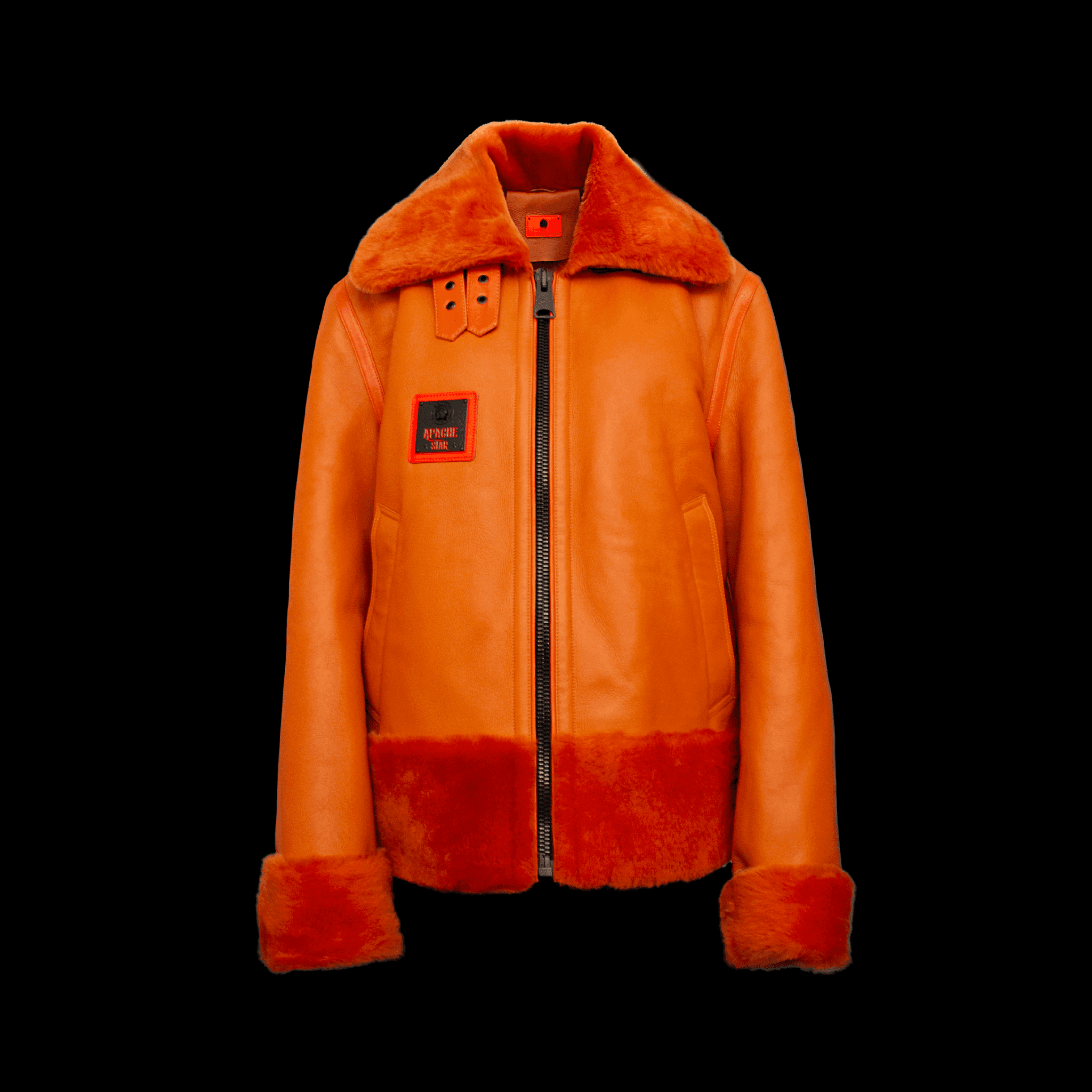
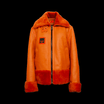
The photograph. A print of a man standing at the Southernmost Point buoy in Key West, creased, taped at one corner, “La Habana – 2015” pencilled on the back. The print was made for the film — the morning it remembers was not. In it, the rider wears the PHANTOM FALCON nappa lamb pilot jacket over the BURNING BATTALION shirt, the same shirt the helper crew wear in the departure scene.
The drawer and the room in Havana. All built. None of it happened.

Why
Why we invented the half we invented
The first version of the film had no second person in it at all. One machine, two countries — so the obvious story was one rider, arriving from both shores and meeting himself in the middle.
It looked spectacular and it did not work, for a reason that has nothing to do with filmmaking.
Nobody missesthemselves.
Two identical men cannot have a reunion. The film needed someone to have been waiting. So the second half of it — the woman, the eleven years, the two objects that get handed back — was invented for the only reason worth inventing anything: the true half could not carry the ending on its own.
The title
Where the bridge comes from
The title is older than the film. Roger Klüh ends his book Apache Star with a single sentence about the crossing:
“A bridge from will to reality had been built.”
— Roger Klüh, Apache Star (2021), translated from the German
The film simply took him at his word.

The line
Where we drew a line on purpose
The crossing happened between two countries with a long and contested history, and we decided early that the film would not have an opinion about it.
So there are no politicians in it, no officials and no uniforms. The flags appear only where they belong in this story — on the machines and on the racing overall. The memory of 2015 follows the departure, the crossing and the arrival in Havana, and it stays with the people. Both shores are photographed with equal care.


The only factual statement in the entire film is its credit line about the powerboat that set the Key West–Havana record in 2015.
Everything else, the audience is welcome to decide for itself.
Questions
Everything else
Is THE BRIDGE a documentary?
No. It is a fiction film that sits on one real event: the powerboat APACHE STAR set the Key West–Havana record in 2015. Everything around that record is invented, and every character in it is fictional.
Was the film really made entirely with AI?
Yes. Every image and every sound was generated. Traditional tools were used only for cutting, mixing, grading and titles.
Are the characters based on real people?
No. Every character in the film is invented — their story and their meeting never happened. The film does not tell the story of the real 2015 crew.
Does the film take a political position?
No. There are no politicians, officials or uniforms in it, and the flags appear only on the machines and the racing overall. The only factual statement in the film is its credit line about the powerboat that set the Key West–Havana record in 2015.
Will APACHE STAR ever be sold?
No. The boat will never be sold. One day, when the time is right, Roger Klüh will make APACHE STAR accessible to the public as an exhibit.
What is the motorcycle in the film?
The APACHE STAR® World Record Heritage Edition — one machine with two countries on it. Read how it was designed or see the machine.
Where can I watch it?
On the Higgsfield project page: THE BRIDGE: 90 miles apart. It is our entry in the Higgsfield Global Film Festival 2026, and it premieres at the Parklichtspiele Buckow on 20 September 2026.
No dialogue.Not one word.Ninety miles.
THE BRIDGE: 90 miles apart · APACHE STAR®













Leave a comment
This site is protected by hCaptcha and the hCaptcha Privacy Policy and Terms of Service apply.