

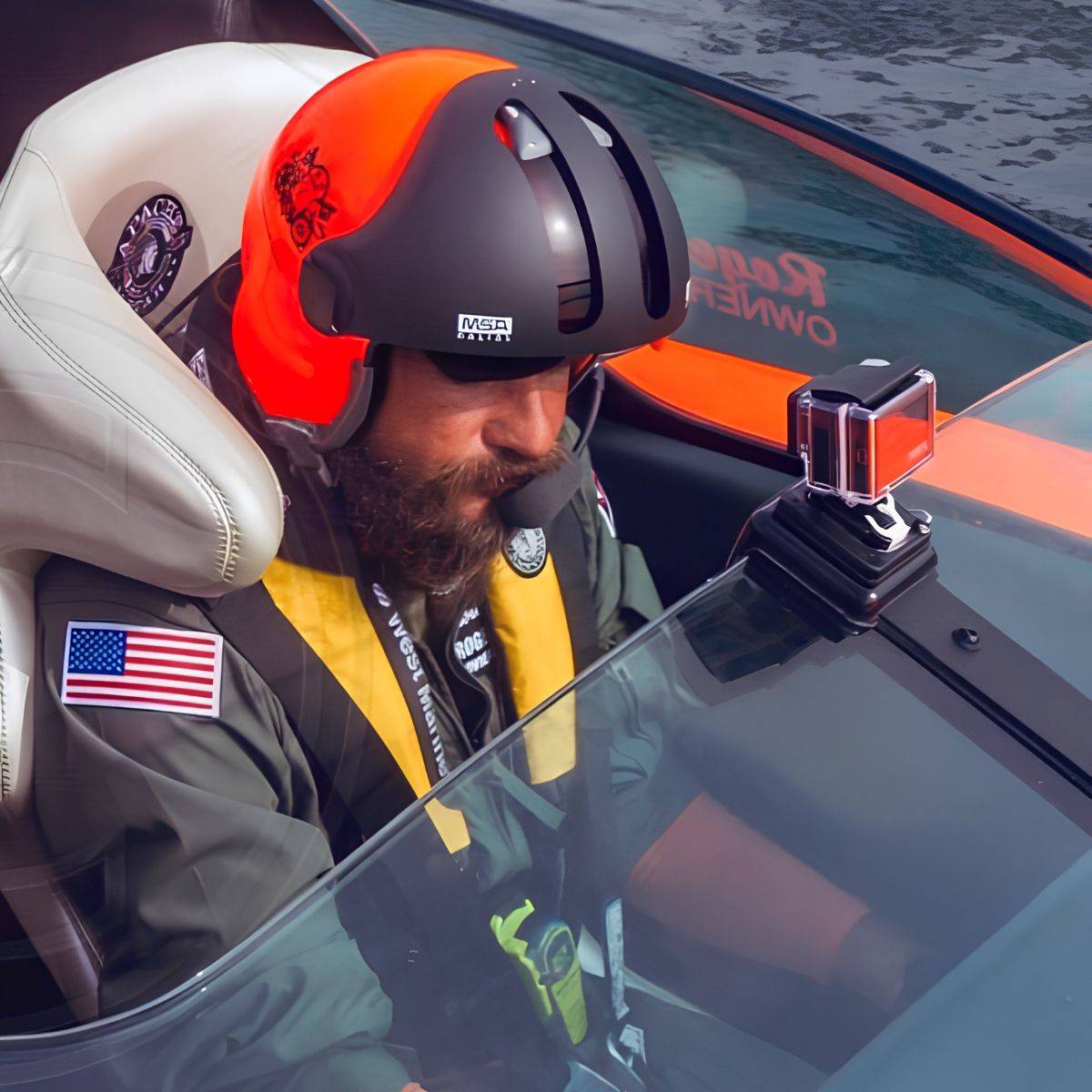

















A piece of offshore racing history — and the foundation of everything the APACHE STAR name stands for.
There are boats, and then there are legends.
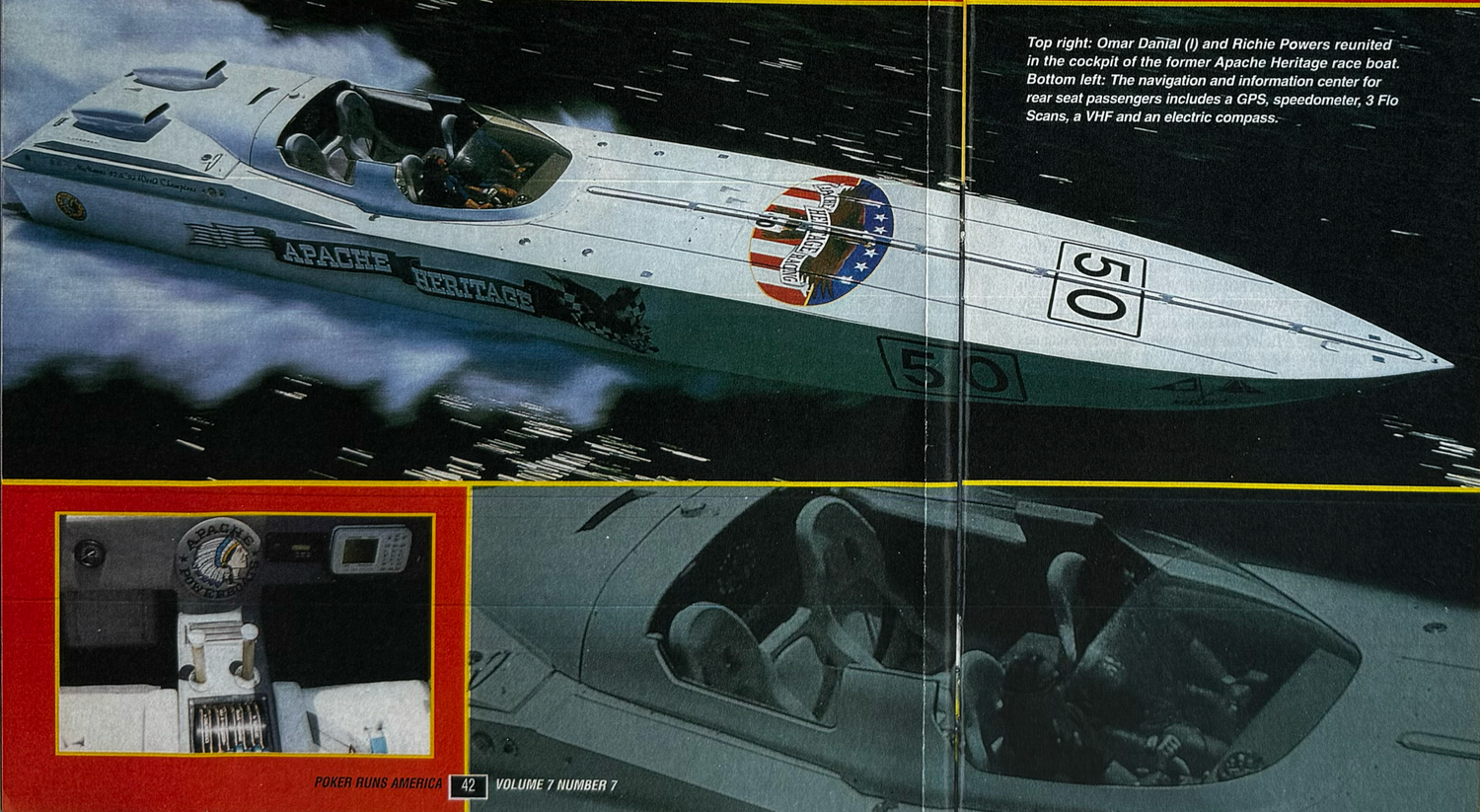
In November 1992, a machine unlike anything the offshore racing world had ever seen glided silently into its slip at the Galleon Resort wet pits in Key West, Florida. Low to the water. Sleek beyond comprehension. Canopied, sit-down, and revolutionary — Apache Heritage, racing number 50, was about to rewrite the rules of offshore powerboat racing forever.
That boat, its builders, and its crew are the living heritage embedded in the Apache name. And that heritage is precisely what APACHE STAR carries forward today — in every stitch of our technical outerwear, every performance formula, every drop of THE LEGACY Eau de Parfum.
This is the story of how it all began.

The Blueprint: A Boat That Had Never Been Built Before
In 1991, Omar Danial — then 22 years old and already a proven endurance racer on the LeMans and Daytona circuits — encountered Apache Powerboats through Patrick Mercurio, an Apache dealer operating out of Saint-Tropez. A demonstration run in rough Mediterranean water was enough. Omar flew to the United States, met Mark McManus, the man behind Apache Powerboats, and immediately began planning something that had never existed: a fully canopied, sit-down V-bottom offshore race boat.
Nothing like it had ever been built.
The Team: Three People, One Shared Obsession
To throttle a machine this radical required an equally exceptional pilot. Omar recruited Richie Powers — a multiple world offshore champion widely considered among the greatest throttlemen in the sport's history. Their shared ambition aligned from the first conversation.
Mark McManus contributed something no other builder could: two decades of carbon fiber and Kevlar composite experience with a zero-failure record. For Apache Heritage, the team applied a military-grade Kevlar formulation developed by DuPont that had never previously been used in boat construction — and has not been used since. The decision cost three months and an entire hull mold.
Every person who caught wind of the project predicted failure. What kept the team moving, according to those involved, was an absolute, uncompromising belief in each other — and the conviction that if they didn't build it, no one would.

The Build: Five Months That Changed Everything
The hull began as a standard 47 Apache mold. Roughly 14 inches of freeboard were removed from the gunnel down, saving approximately 900 pounds and producing the radical low-slung silhouette that would halt the racing world in its tracks. A 60-inch Lavin Foundation dual canopy was installed. A keel pad was added. Three MerCruiser 1000SC engines provided the power, developed in close partnership with Mercury Marine throughout the build.
Development time from concept to water: five months — an almost impossible timeline for an entirely new class of prototype.
Apache Heritage was splashed for the first time at Mercury Marine's Lake X test facility in Florida on Monday, November 9, 1992. The first race was 48 hours away.
The first water test revealed an immediate problem: forward visibility at racing speed was near zero. The team called Mark McManus with a crisis message that has since passed into offshore folklore.
The All-Night Surgery
The boat returned to the factory the same evening. The deck needed to be lowered — a structural intervention that had never been performed on a hull of this type, with no established procedure to follow. Mark McManus drew up the plan that night. Nine employees worked through until dawn, removing internal bulkheads, recutting the hull, re-glassing, and rebuilding the transom. By 5:30 am Tuesday, 600 pounds of hull material had been removed and the structural work was complete.
A police escort delivered the repaired boat to Key West at 2:00 am Wednesday — the morning of the first race.
Omar Danial and Richie Powers sat in the cockpit of Apache Heritage for only the second time in their lives, completed their setup, and put it in the water. The first pass through four-to-five-foot following seas confirmed what the all-night crew had worked to achieve: they could see. The boat was race-ready.

Key West, 1992: History Is Made
Apache Heritage #50 didn't just compete at the 1992 Key West World Championships. It changed what offshore racing could be.
The team ran conservatively on the first lap — Omar had never piloted a boat from a standing race start — but steadily built confidence. By the end of lap one, Apache Heritage sat second overall, behind only Tom Gentry and John Connor in the Gentry Eagle. A fuel shortage in the closing stages cost them first overall by nine seconds, but they crossed the line first in V-bottom class.
Three new engines were installed for the second race. The result left no room for interpretation:
First overall in points. World Championship for Superboat Vee. Average speed: 94.74 mph over the 147-mile course.
At 22 years old, Omar Danial became the youngest offshore world champion in history.
1993: Repeat Champions
Apache Heritage arrived at the 1993 SBI World Championship at Key West with no set-up changes — and met a formidable new rival. Ted Sabarese had commissioned Reggie Fountain to produce a fully canopied sit-down competitor, the IN-XS, which arrived at the Galleon docks to genuine shock from the entire racing field.
Wednesday's race went to IN-XS, by nine seconds.
Saturday's SuperBoat final — raced in eight-foot breaking seas — went to Apache Heritage. The boat outran every V-bottom and every cat in the field to claim the overall title at an average speed of 88.73 mph. Mark McManus later described it as the greatest day of his life.
Richie and Omar were world champions again — having won every single race they competed in together, bar one.

A Promise That Was Never Broken
Before the final race that Saturday, Omar had a quiet moment alone with his boat. He made himself a promise: if they won, he would never sell Apache Heritage.
They won. And he never did.
Eleven years later, after the boat had rested in storage through what became a legendary retirement, Apache Heritage returned to the water — not as a race boat, but as a poker run vessel. The three original MerCruiser 1000SC race engines were replaced with newer MerCruiser 900SC's. The canopy top was lowered four inches for easier entry and exit. But the soul of the boat — the Kevlar-carbon composite hull, the revolutionary low-profile design, the championship pedigree forged in Key West's roughest seas — remained entirely intact.
At a Poker Runs America Fort Myers event, Omar gave the boat to his friend and mentor Richie Powers on a Friday evening, keeping his promise never to sell it, and keeping it in the family.
The legend had earned its rest. But it wasn't finished yet.

From Apache Heritage to APACHE STAR: The Greatest Chapter
Some stories don't end. They transform.
When Roger Anthony Cassius Klüh acquired the most iconic Apache hull ever built, he didn't see a retired race boat. He saw a vessel with unfinished business — a machine built from the most advanced Kevlar-carbon composite ever used in offshore construction, engineered to withstand punishment no ordinary hull could survive, and carrying the soul of two world championships in its bones.
He had it modified for a crossing that no one had ever dared to attempt.
The boat was rebuilt, re-equipped, and given a new name: APACHE STAR.
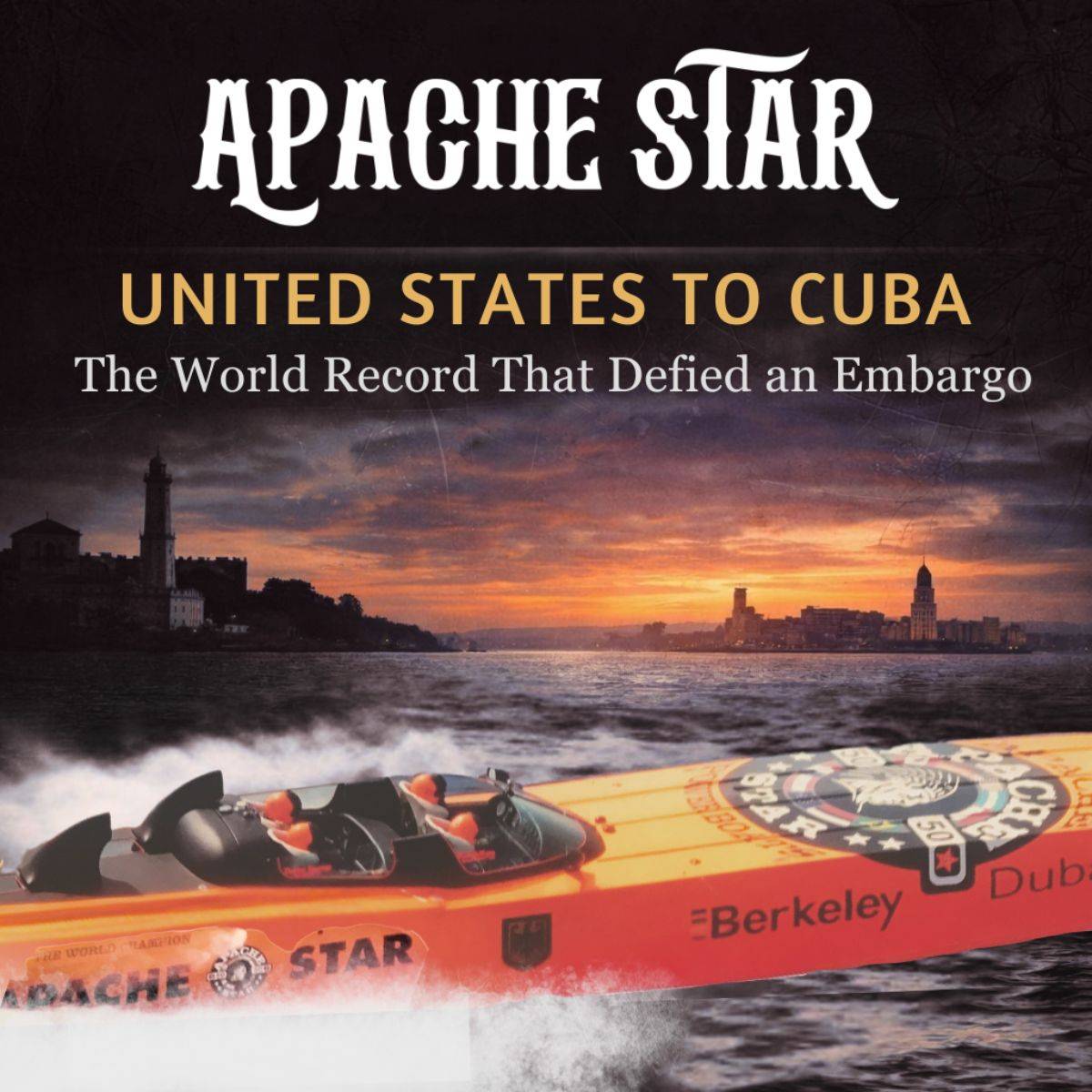
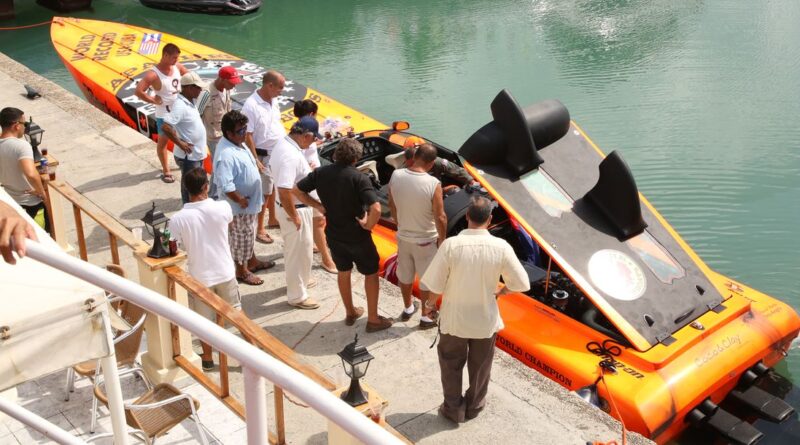
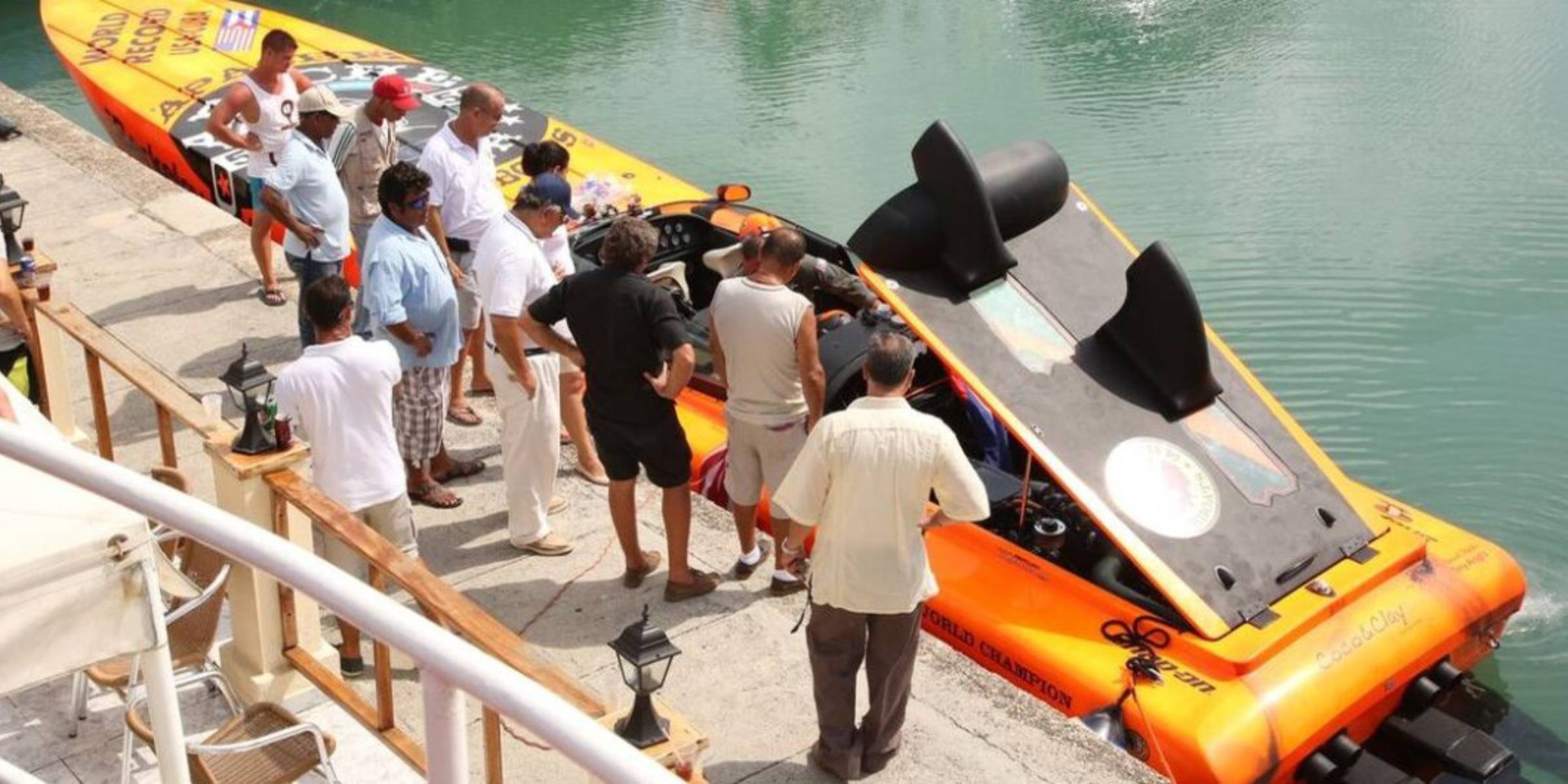
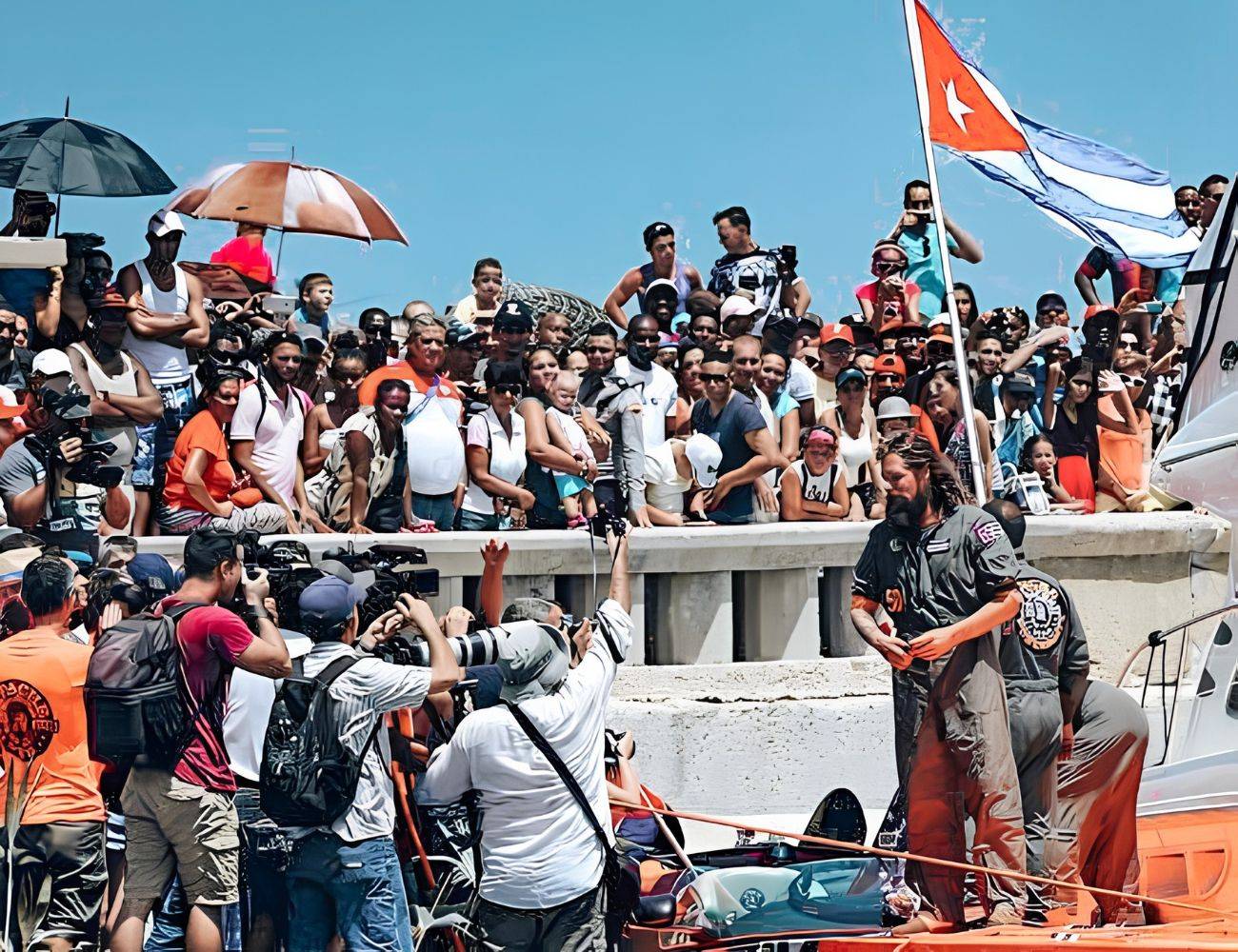
And then Roger Klüh pointed it south — from Key West, Florida, across open water, past every maritime boundary, through the political wall that had separated two nations for decades — all the way to Cuba.
The Key West–Cuba crossing. The world record that defied an embargo.
No powerboat had ever made this crossing in record time. No one believed it was possible. Roger Klüh proved them wrong aboard the very same hull that Mark McManus, Omar Danial, and Richie Powers had built in five impossible months in the summer of 1992 — the world's first canopied sit-down V-bottom offshore race boat, now the vessel of the most daring single powerboat crossing in modern history.
Two world championships. One world record. One boat.
This is what APACHE STAR is built on. Not a marketing story — a documented legacy of people who were told it couldn't be done, and did it anyway. It lives in every product bearing the name: in our technical outerwear engineered for extreme conditions, in THE LEGACY Eau de Parfum, in our performance supplements built without compromise.
Read the full story of Roger Klüh's world record crossing →
Rugged Luxury. Raw Emotion. Rebellious Spirit.
That's not a slogan. It's what this hull was built from.
Apache Heritage 50 — Technical Specifications
| Specification | Detail |
|---|---|
| Starting Hull | 47 Apache |
| Race Hull LOA | 45'6" |
| Beam | 8'0" |
| Race Weight (approx.) | 13,800 lb |
| Fuel Capacity | 550 gal (6 tanks) |
| Hull Deadrise | 24 degrees |
| Ballast Tanks | None |
| Hull Strakes | 2 full length, 1 half length |
| Keel Pad | 12" × 80" |
| Canopy | Lavin Foundation |
| Construction | Carbon Fiber and Kevlar Composite |
| Hatch and Cage | 6061 Aluminum |
| Race Power | Triple MerCruiser 1000SC engines |
| Race Drives | MerCruiser #6 Wet Sump |
| Propellers | 17½ × 30, 4-blade Mercury Racing |
| Development Time | 5 months |
This editorial draws on reporting originally published as "Offshore's Living Legend" by Richard Crowder in Poker Runs America, Volume 7, Number 7. All narrative sections are independently paraphrased. Factual data, race results, and technical specifications are sourced from the original article. Photography credits: Apache Powerboats / Poker Runs America.
Explore more from APACHE STAR:
- The World Record That Defied an Embargo →
- APACHE STAR® Born from a Legend. Built for a Legacy →
- The APACHE STAR Icon Dark Scrambler →
-
The APACHE STAR World Record Heritage Edition →
One motorcycle. Cuba on one side, USA on the other. - Two Sides, One Machine: The Heritage Edition Motorcycle →
- Born from record-breaking heritage. Crafted for timeless journeys. → THE HERITAGE TRUNK













Leave a comment
This site is protected by hCaptcha and the hCaptcha Privacy Policy and Terms of Service apply.